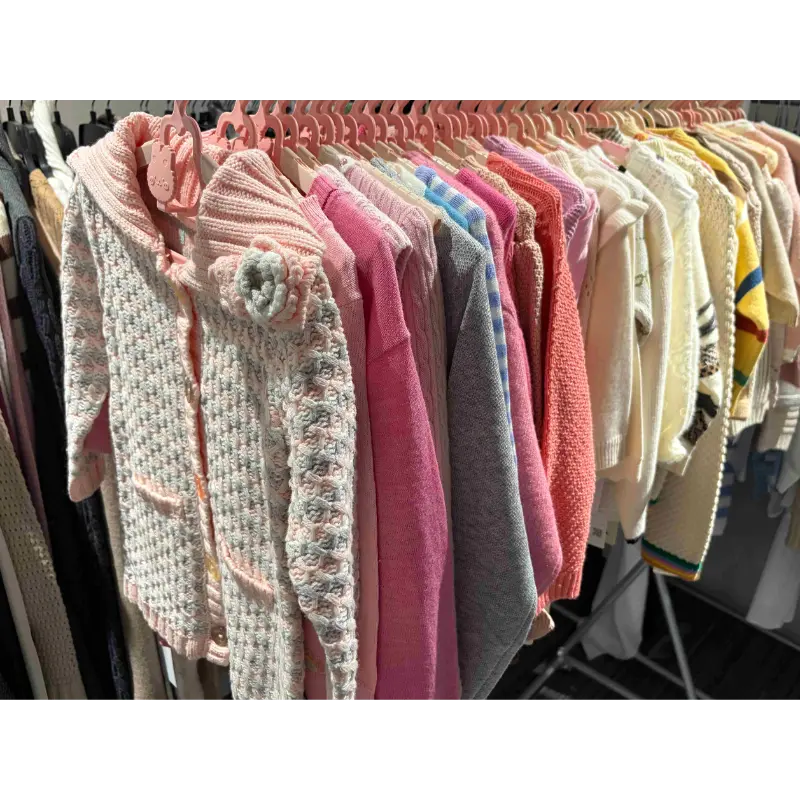

Why Baby Wool Knitwear Collection Is Growing in Premium Baby Fashion
Natural fibers, subtle detailing, and stricter expectations for product safety are shaping premium babywear development. In Europe, knitted and crocheted garments accounted for 76.9% of the babywear import market by value, according to CBI's September 2026 market analysis. The figures highlight the importance of knitwear in a market where comfort, material quality, and practical design influence product decisions.
Premium Babywear: Materials Under Greater Scrutiny
Wool occupies a distinct position in infant clothing. It provides insulation and can manage moisture, making it useful for cardigans and transitional layers. But the word “wool” alone says little about how a garment will feel against a baby's skin.
Fiber fineness, yarn construction, knitting density, and finishing all affect softness. Coarser fibers may feel uncomfortable, while unsuitable finishing or poorly constructed seams can reduce wearability. For this reason, material specifications and finished-garment testing matter more than broad claims about natural fibers.
CBI identifies soft, breathable fabrics, easy care, and product safety as important considerations in the European babywear market. Its market-entry guidance also highlights demand for quality materials and garments that retain their shape after repeated washing.
Natural Does Not Automatically Mean Safer
Natural fibers are not a substitute for chemical and mechanical safety checks. Dyes, finishes, sewing threads, buttons, and other components can affect the finished product.
For infant garments, product development should account for applicable market requirements, restricted substances, secure closures, and the risk posed by loose or detachable small parts. Certifications can help demonstrate compliance when the specific product and all relevant components fall within their scope.
Clear evidence is more useful than unsupported claims such as “completely safe” or “hypoallergenic.” Wool comfort also varies between individuals, so a natural-fiber label should never be treated as a guarantee against skin irritation.
Classic Cardigans Meet Contemporary Design
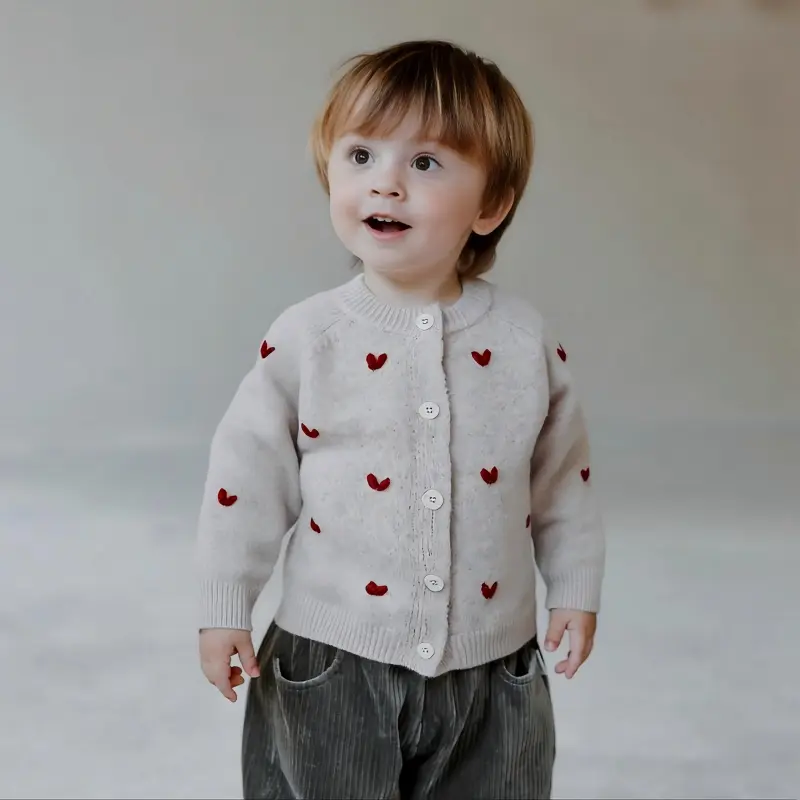
Premium baby knitwear is increasingly associated with restrained decoration and classic shapes rather than elaborate graphics alone. Small floral motifs, heart embroidery, ribbed edges, and neutral shades can distinguish a garment without limiting how it coordinates with other clothing.
These details also create practical design questions. Embroidery needs secure stitching, while buttons must be firmly attached and appropriate for infant use. Ribbed cuffs should provide a suitable fit without restricting movement.
| Design Detail | What Development Teams Need to Check |
|---|---|
| Wool yarn | Fiber composition, softness, and consistency |
| Knit structure | Stretch, weight, and dimensional stability |
| Embroidery | Stitch security and surface comfort |
| Buttons | Attachment strength and applicable safety requirements |
| Seams and edges | Smooth finishing and freedom of movement |
| Care instructions | Cleaning method, shrinkage risk, and shape retention |
A cardigan may look simple, but these factors determine whether its appearance is maintained after regular use.
Why Production Flexibility Matters
The Baby Wool Knitwear Collection reflects a product category in which material selection and design details need to work together. Classic cardigan silhouettes can accommodate different colors and embroidery concepts, but each variation still requires attention to sizing, construction, and production consistency.
RUIFAN's company profile reports more than 25 years of garment production experience across knitwear, sweaters, light woven clothing, denim, Tencel products, and coats. Its associated facilities include automated production equipment and a smaller workshop supporting fashion-oriented runs of approximately 300–500 pieces per style.
These capabilities are relevant to a broader industry challenge: a design that looks promising in a sample must also be reproducible across the intended size range. Changes in yarn, color, or embroidery placement can affect appearance and manufacturing consistency, making sample review and clearly documented specifications important before bulk production.
The Cost of Getting Small Details Wrong
Infant clothing is washed and handled frequently, while its useful size window can be short. A loose button, distorted neckline, or garment that shrinks unexpectedly can quickly undermine its practical value.
Quality checks should therefore cover finished measurements, seam workmanship, closure security, surface condition, and performance after appropriate care testing. For wool garments, washing instructions need particular attention because some constructions may shrink or lose shape under unsuitable conditions.
This is also where product claims need to remain precise. If a garment is described as machine washable, the claim should match its actual care testing and labeling. If a textile certification is referenced, its scope should be verified rather than assumed to cover every component automatically.
Premium Design Is Becoming More Specific
The European market is not moving toward a single definition of premium babywear. CBI's market-entry research describes demand for certified materials, refined design, comfort, and shape retention, while also noting that market requirements differ by segment.
For wool knitwear, this means that premium positioning depends on more than fiber choice. A successful product needs a clear purpose, appropriate construction, consistent sizing, and documentation that supports its material and safety claims.
The Baby Wool Knitwear Collection offers a useful example of how classic cardigan styling, wool-based materials, and embroidery can be assessed against these practical requirements. The relevant questions are not simply whether a garment looks premium, but whether its fabric, finishing, closures, and care instructions support its intended use.
What the Trend Means for Baby Knitwear
The current direction in premium baby fashion puts greater emphasis on verifiable material information, careful construction, and designs that remain useful beyond a single occasion. Natural fibers continue to have a place, but their performance depends on the quality of the finished garment and the evidence behind its claims.
For RUIFAN, the company's experience across knitwear and wider apparel categories provides context for developing infant garments within this changing market. The Baby Wool Knitwear Collection illustrates the broader point: in premium baby fashion, material choice attracts attention, but documented quality, secure construction, and practical wearability determine whether a design meets real-world expectations.
Next :
-
Related News
- How Baby Wool Knitwear Collection Reflects the Rise of Natural Babywear
- Why Women’s White Lyocell-Cotton Mini Shirt Dress Is Becoming a Capsule Wardrobe Essential
- How Did One Woman Build a Capsule Wardrobe Around a Single Cashmere Sweater for Women—and Never Look Back?
- Children's Knitwear: How to Choose the Right Fabrics, Styles, and Sizes
- How Can Women's Fitness Wear Sport Pants Improve Comfort, Performance, and Everyday Style
- Lace Meets Knitwear: Why 3D Lace Sweaters Are Bringing New Texture to Women's Fashion
Leave me a message